

Integrating DNS filtering directly into the router makes it possible to protect the entire network from a single point, without having to configure every connected device individually.
This approach is particularly effective for businesses, MSPs, ISPs and organizations that need to manage multiple networks, locations and environments while maintaining centralized browsing policies that are consistent with their infrastructure.
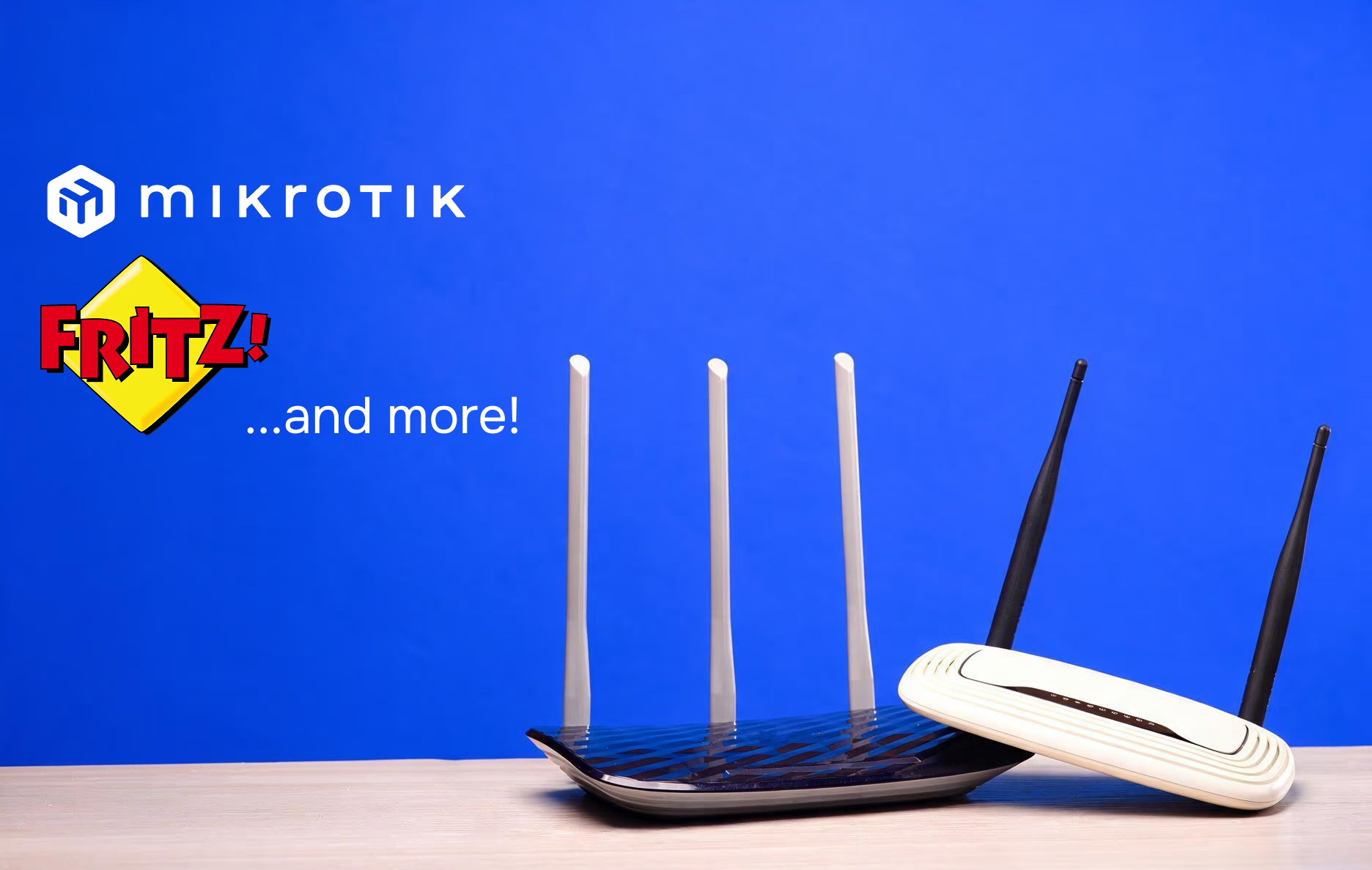
With FlashStart 2026, integration with MikroTik, FRITZ! and many other routers is now available on the new platform. Configuration methods vary depending on the router and its supported features, but FlashStart provides dedicated integration options and guides to simplify each step.
Security data
Cyber criminals exploit data stored in digital systems and other devices in order to gain access to sensitive information. Recent reports of serious breaches of corporate networks have highlighted the need for improved cyber security measures in order to protect users against harmful activities.
With more and more people working remotely due to the pandemic, cyber criminals have even more opportunities to exploit weaknesses in corporate systems and networks. Hackers can steal sensitive data, including financial and personal information, or introduce malware into a system, which could cause further damage. It has become increasingly important for companies to invest in appropriate security measures, such as firewalls, antivirus software, and detection and prevention systems.
MikroTik is equipped with a powerful firewall and, in combination with FlashStart, can protect the network infrastructure in order to prevent and respond to potential threats on the internet. The purpose of this guide is to show how we can design a UTM Firewall with FlashStart and Mikrotik.
Types of attacks on the internet and data networks
Passive attacks
Passive attacks in cyber security have been a growing concern for data security professionals. Using techniques such as traffic detection and analysis, hackers can gain access to data without actively attacking the system. These passive attacks are difficult to detect and, if undetected, can cause serious damage to the system.
Unlike active attacks, which involve direct interaction with the target system, passive attacks allow hackers to gather information without the knowledge of the end user or network administrator. Such attacks involve the interception of network communications or the scanning of open ports and services on a network. Attackers can use this collected information in order to gain access to sensitive information stored on a server or in databases. This type of attack is particularly dangerous because it can go undetected for long periods of time before IT or data security personnel detect signs of the intrusion.
Active attacks
An active attack is a type of cyber attack that searches for vulnerabilities or exploits existing weaknesses within an organization’s system or network. Examples of active attacks can range from denial of service (DoS) attacks, which flood a system with requests until it fails, to data breaches in which sensitive information can be compromised. Active attacks often involve malware or malicious code that is injected into the target’s systems, allowing attackers to gain control. By exploiting these weaknesses, attackers can gain access to sensitive data or disrupt large-scale operations.
Why integrate DNS filtering into the router?
The router is the point through which the traffic generated by connected devices passes. Applying DNS Security at router level therefore extends protection to computers, smartphones, tablets, IoT devices and other endpoints without requiring software to be installed on each one.
This approach provides several benefits:
- centralized protection management;
- consistent application of browsing policies;
- protection for all connected devices;
- reduced operational complexity;
- easier management of multiple networks and locations;
- integration with the existing infrastructure.
DNS filtering makes it possible to control network requests and block access to dangerous, unwanted or non-compliant domains based on the policies defined by the organization.
Configuring FlashStart on different router models
Each router manufacturer and model may require a different configuration method. The available features depend on the operating system, installed firmware and technical capabilities of the device.
The most common configuration method uses Dynamic DNS, which keeps the association between the connection’s public IP address and the network configured within the platform up to date. This is particularly useful when the Internet provider assigns a dynamic IP address that may change over time.
Most routers support this configuration method. More advanced devices, such as MikroTik routers, can also support additional technologies, including DNS over HTTPS, commonly known as DoH.

MikroTik configuration with Dynamic DNS and DoH
The integration between FlashStart 2026 and MikroTik routers provides different configuration options.
In addition to Dynamic DNS, compatible devices can be configured to use DNS over HTTPS. This technology sends DNS requests through an encrypted HTTPS connection, helping protect DNS traffic while it is transmitted between the router and the resolution service.
The availability of multiple methods allows organizations to select the configuration that best matches their network characteristics and security requirements.
An automatically generated script for easier integration
To simplify MikroTik configuration, FlashStart 2026 automatically generates a script at the end of the guided procedure.
The script is provided as the configuration output and contains the instructions required to integrate the router with the service. Administrators can apply the necessary parameters to the device, reducing manual operations and the risk of configuration errors.
This approach makes deployment faster, particularly for MSPs, operators and administrators responsible for configuring multiple networks or locations.
Support for multi-WAN infrastructures
Another important feature introduced with FlashStart 2026 is support for multi-WAN infrastructures.
Compared with the legacy platform, where MikroTik configuration had limitations when managing multiple WAN connections, the new platform allows administrators to configure more than one WAN.
This capability is especially valuable for organizations that use multiple Internet connections to provide business continuity, load balancing or failover. DNS Security can therefore adapt more effectively to complex network architectures without being limited to a single connection.
Integration with Mikrotik, FRITZ! routers and other devices
FlashStart 2026 is not limited to MikroTik devices. The platform also supports integration with FRITZ! routers and many other models available on the market.
When a router does not support DNS over HTTPS, configuration is generally possible through Dynamic DNS. This means that networks using devices with more basic features can still benefit from centralized DNS filtering.
Administrators should always verify the capabilities of the individual router, as setting names, procedures and available features may vary depending on the manufacturer and firmware version.

Next-generation DNS protection, fully cloud & AI-based and easy to activate
Dedicated guides for router configuration
To support administrators throughout the integration process, FlashStart provides dedicated Archbee guides for the different supported routers.
The documentation explains the steps required to configure each device and connect it correctly to the platform. These guides can be consulted both during initial activation and when migrating to FlashStart 2026.
Before beginning the configuration, it is advisable to verify:
- the router model and version;
- the installed firmware;
- Dynamic DNS availability;
- potential support for DNS over HTTPS;
- the number of WAN connections in use;
- the credentials required to access the router settings.
Next-generation DNS protection, fully cloud & AI-based and easy to activate
Migrating your router configuration to FlashStart 2026
Integration with MikroTik, FRITZ! and other routers is now available on the new platform. Users can therefore continue using FlashStart directly through their existing network infrastructure while benefiting from the new features and management experience provided by FlashStart 2026.
Because the procedure may vary according to the router and network architecture, administrators should follow the guide dedicated to their device and verify that all parameters have been configured correctly.
For assistance during the migration, users can access a direct and dedicated support channel with FlashStart’s NOC experts.
The service is available from 9:00 a.m. to 7:00 p.m. Italian time. When contacting the team outside these hours, users can describe the issue and the support they need in the chat. The experts will then be able to address the request promptly when they return.
Next-generation DNS protection, fully cloud & AI-based and easy to activate
More flexible DNS Security for multiple networks and locations
With FlashStart 2026, integrating DNS filtering directly into the router becomes more flexible and better suited to complex infrastructures.
Dynamic DNS support, the option to use DoH on compatible MikroTik devices, automatic configuration script generation and the ability to manage multiple WAN connections make it easier to implement DNS Security at network level.
Together with dedicated guides and support from FlashStart experts, these features help businesses, operators and service providers protect Internet browsing while maintaining centralized management that is consistent with their network infrastructure.